Gottlieb Daimler – pioneer of motorization
The story of Gottlieb Daimler begins in the 19th century and takes us straight to the origins of modern mobility. Thanks to his foresight, enormous ambition and perseverance, he laid the foundations for a new era with his high-speed petrol engine. His life's journey shows how world-changing technology is created from craftsmanship.
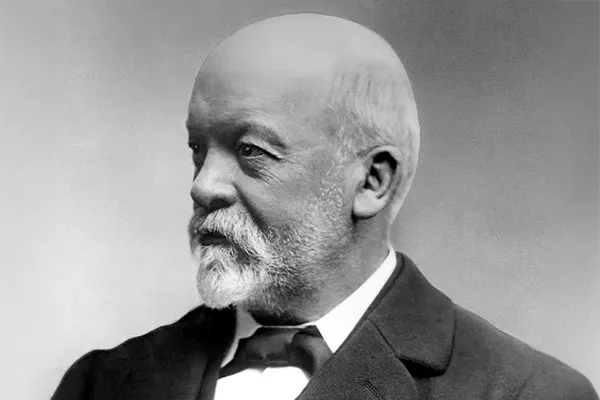
Gottlieb Daimler - The beginnings
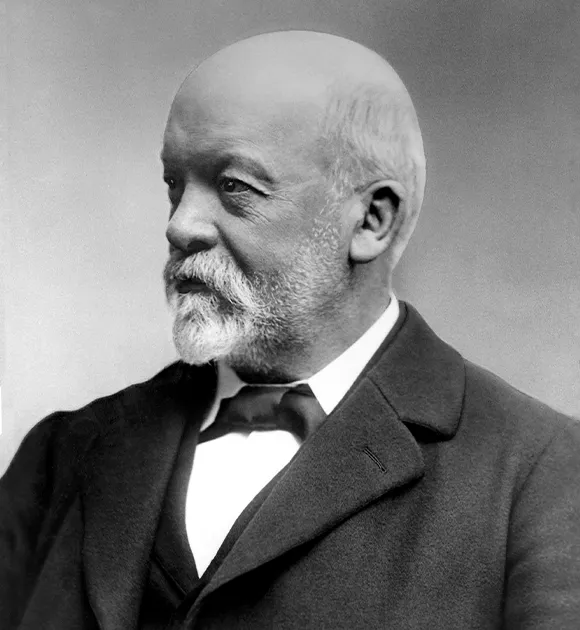
The story begins in 1834 in Schorndorf, east of Stuttgart. Gottlieb Daimler was born the second son of an innkeeper and master baker. His keen technical understanding prompted Daimler to learn the trade of gunsmith. However, the Swabian inventor felt called to greater things. After completing his apprenticeship and working for several years in an Alsatian machine factory, Gottlieb Daimler began studying mechanical engineering at the Polytechnic School in Stuttgart in 1857.
Who was Gottlieb Daimler?
Gottlieb Daimler was one of the founding fathers of the oldest automobile manufacturer in the world, today's Daimler AG, and the inventor of the high-speed petrol engine. After an international engineering career in England and France, among other places, Gottlieb Daimler founded a test workshop in his garden house in Cannstatt in 1882. Together with his employee Wilhelm Maybach, the inventor duo miniaturised and qualified the four-stroke engine invented by Nikolaus Otto for mobile use. It was a long and arduous journey.

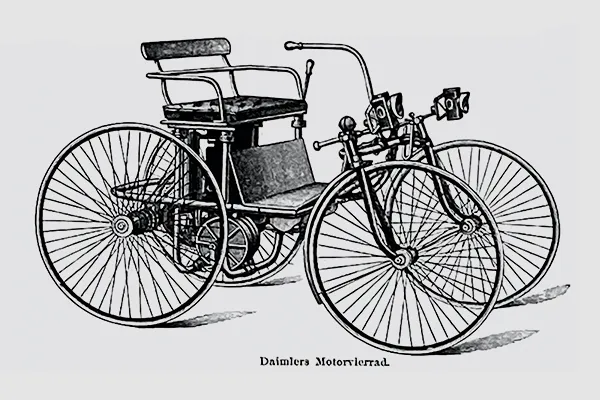
What does Gottlieb Daimler invent?
In 1885, the time had come. Gottlieb Daimler revolutionised engine construction with the first small, high-speed
petrol engine that could power vehicles of all kinds on land and water. Gottlieb Daimler invents the first
motorbike made of wood, the so-called two-wheeled ‘Reitwagen’, and has it patented. This was followed somewhat
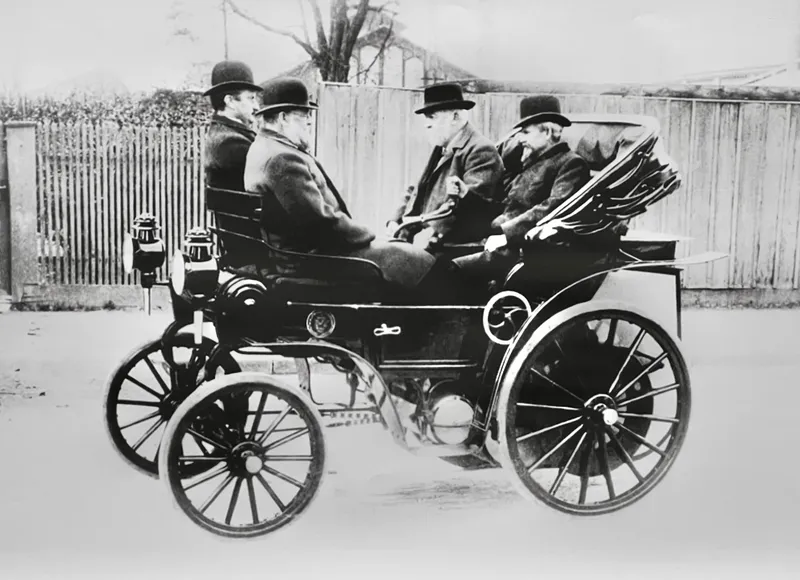
later by a motorboat and a carriage fitted with a petrol engine - the first four-wheel automobile was born.
But the patent for the first ever automobile was secured by someone else.
It was none other than Carl Benz, who developed his
3-wheeled Benz Patent Motor Car in Mannheim at the same time. His wife Bertha Benz proved the functionality of her
husband's Benz motor car to the whole world with a long-distance journey from Mannheim to Pforzheim and back
again.
The Daimler-Motoren-Gesellschaft
Gottlieb Daimler begins to take his idea out into the world. In England, France and America, his engines provide
the impetus for motorisation there. Together with Wilhelm Maybach, Max Duttenhofer and Wilhelm Lorenz, he founds
the Daimler-Motoren-Gesellschaft and moves into new factory premises on the Seelberg in Cannstatt in 1887. After
only a few years, Gottlieb Daimler leaves the company due to disputes with his co-partners. After a short time,
however, he returns as a shareholder, Daimler becomes Chairman of the Supervisory Board and brings DMG an
unexpected upswing.
Gottlieb Daimler revolutionises the world with his invention. His work is far more comprehensive than he would
ever have thought possible. Motorisation in water, on land and in the air has become a reality all over the
world. With his development of the first high-speed petrol engine, he ushered in a new era in human history that
still determines our daily lives today.